Search This Blog

Saturday, April 30, 2011

On death and dying

image: Points of Departure - Margaret Elliot. Tony Carr Collection - Sydney

An email from a friend:

Before I Forget…

Thesis:

We are all born with a ticket in our hand. It says ‘Destination: Death.’ It does not state how long the ride will be, whether we will travel first-class or third, or whether we will get a window seat or not. Just the facts: we are born and from that second on, the only other certainty is that Death will ultimately clip our ticket. We’ve all got a ticket to ride. One way; non-refundable; delivery guaranteed.

Message From a Fellow-Traveller:

Gidday. For anyone reading this who doesn’t know me, I’m Richard. I’ll be 62 on June 26. I have prostate cancer with metastasised tumours throughout my skeletal structure; terminal. Also, I have ischemic disease of the brain, (in the white matter), mainly affecting my memory. It too is both progressive and irreversible. Them’s the breaks.

Every day, chunks of my memory break off like great ice floes from a frozen continent and crash irrevocably into the sea of nothingness and unknowingness, there to melt into useless slush; cold, deep waters indeed. I know this is happening because people talk to me about things I should know of and remember, but don’t and can’t. It’s a frightening thing – and tinged with sadness, too. Memory is much of ‘who we are’. If I lose all or most of my memory, who will I be then? I don’t know – but certainly not the ‘me’ that is sitting at the keyboard right now typing this message. I hope that the cancer kills me before the ischemic disease progresses much further.

I’ll use ‘TIP’ as an abbreviation for ‘terminally ill person’ (or people).

TIPsters like myself devote a fair amount of time to thinking about death – though often, not in even a slightly morbid fashion. It engages one’s intellectual interest. What will it be like to die? I don’t know and I may never know. I do know that all the genuine experts on the subject are already dead. We all have to fashion our own path to death. But I am very curious about it all. How could I be ‘me’ and not be curious? It is the very last and greatest adventure, I guess … but one with an unknown ending: Indiana Bones and the Temple of Whom? Or where.

The body accepts the need to die before the mind does. Resolution comes when the mind accepts that simple fact of life and death – or goes mad denying it. Once accepted, TIPsters can get on with the business of living well and dying better.

Believers in a deity might be happy to die in the belief that they will get their reward in a life hereafter. Atheists – and I am one – cannot or do not share that belief. This has a sad corollary: we do not have the comfort of believing that life’s wrongs are all neatly remedied in the hereafter. How sad. But, having given it all much thought, I can only see the concept of divine justice as a convenient human construct. Frankly, the Universe, my dears, couldn’t give a damn. What we have is what we get, then finis.

Well, maybe not. Surely if we have lived, no matter what we have done with our time or life, we have certainly changed what would otherwise have been? The very fact of our existence is a guarantee of a kind of immortality: the world would be different had each and every one of us not existed. I find quite some comfort in knowing that. But I do believe that death marks the end of all consciousness, for ever, in every dead individual. I know, of course, of the stories of ‘near-death’ experiences. Classically, the person experiences a tunnel-like dark environment, with a blinding white light at the exit end. Often, they see white-clad figures who speak encouragingly to them as they approach the light. To me, it all sounds remarkably like a baby’s trip down the birth canal. The white-clad figures are probably the medical staff who orchestrated our birth; the encouraging voices are probably saying ‘push’ to an exhausted mother-to-be. So it seems to me. Having been born stupid and worked assiduously at graduating from being a halfwit to a complete idiot, I’ve had a few near-death experiences of my own, by the way. They usually involved things like cliffs, power lines, deep water, etc. Life is for living, after all!

TIPsters watch people a lot. Do they treat us differently now that they know we are dying? Yes, they do. It’s almost like we are already dead at times. Some folk hold conversations in which the TIPster, though present and the subject of the conversation, is simply ignored. How extraordinary! People also tend to get a bit tongue-tied at talking about death or dying; especially with or to TIPsters. It’s the last great taboo. How odd, because it’s the only thing I know for sure that every other person on the planet will share with me: death. Still, maybe if we don’t talk about it, it’ll just go away, eh? No chance. As I am now so you shall be. The bell tolls at the right time for all of us. So even if you go like the clappers (sorry!), death will find you when it will. Given enough rope, even campanologists eventually die.

Some folk have asked me if I’m angry about dying at a relatively young age. No, I’m not. What possible good would it do? And who would I be angry at? Sure, I look at my family and friends and regret that I will be leaving them, but no more than that. No bitterness, no ‘if only’ rubbish or mad attempts at weird diets, faith healers, novenas, charms, witch doctors of any and every kind, alternative healers, or any hocus-pocus at all. I’m dying. I know it and accept it. Anything else is madness.

I mentioned watching people. TIPsters have to be careful. There are people who care for us, who hurt on our behalf. We must reassure them that ‘everything’s okay’ and that we are not in too much pain. If we cannot ease pain for ourselves, we can at least do so for others. We can also talk about dying and death and make friends realise that we have come to terms with it, so that they know it’s okay. I tell some appalling jokes about death and dying, the whole purpose being to make people lighten up and laugh a little. But I’m a Celt, and we find it hard to take much seriously at the best of times. As I often say, I’m only dying. It’s nothing serious like becoming a naturalised Australian. I have also said that when Death comes for me, I’ll look him in his spectral empty eye-socket and say “You’ll never take me alive, you know.” Well, what else can I or should I be doing? Crying? No thanks.

But seriously, other people will still feel pain after we TIPsters have ceased to feel anything. It behoves us therefore to be kind – and thoughtful - to those we will leave behind. Reassure them, hug them, let them know that it’s all okay with and for you. Be an adult. Care. Lie a little if you must.

People who die suddenly are sometimes perceived as lucky. “He went to bed at night and didn’t wake up in the morning.” Well, luck is how you see it. Certainly, such people avoid a lot of physical pain by dying in their sleep. But they lose too, the opportunity to hug those dear to them and say “I love you” to them. Who is to say which one is the ‘better’ death? The price of foreknowledge of death is paid in coin of a harsh currency; but it has its compensations, too.

A reflective state is one of the recognised steps in the protracted dying process. A weighing and balancing of weights, an accounting in and of life’s ledger; a summation, if you will, of one’s victories, losses and draws. As an atheist, I find it easy to thank Mother Earth for sheltering me for 62 years. She has given me everything. Earth can happily survive without people; people can’t survive without Earth. She is the perfect landlady par excellence. But in the end, even she calls for the quitrent to be paid: death is the quitrent. Thanks, Earth, for giving me a home. I sometimes have sneaked into parks and reserves and planted things (no: not that stuff!). Earth needs us to help pay the rent properly; each and all of us, often. If we don’t we’ll lose our home; simple, brutal and factual.

Should I forget you, friends, family, acquaintances, it will not be because I choose to. I already know that you know that. I feel sure that, though the memory slate will be progressively and irreversibly wiped clean on its exterior, deep within my damaged brain, the paths of love that memory has scoured out will remain, though they will be unable to be accessed. Perhaps – and I certainly hope so – in a coma before death, I shall walk those paths again. But even if I cannot do so,

be assured: the love and goodwill remains strong and indelible inside me. It anchors me.

I can’t and don’t bleat at what life has dished out to me. Why should I? I have lived and still am living. Every day and in many ways, some old, some quite new; but all part of an exciting life. I do weep, rage and rail at a God I no longer believe in for the damage little children undergo, in body, mind or spirit. Oh, suffer the little children indeed! It is so cruel and so obscene. No God either could or would allow such dreadful things to happen to children. So I am an atheist. How could I not be? It is either that or accept an unjust God. I cannot do so.

Would that memorable, immortal and novel words of wisdom could flow from my fingers and mind into this keyboard. They can’t and don’t. I know only this: if you would truly find salvation, seek it within yourself. We are real; there is no act of blind faith necessary. We exist: We are who are. Be gentle to yourself; be gentle to others. Be gentle to the planet. Never stop learning, enquiring, marvelling, wondering. Be brave, for as long as you can, as much as you can; all things end - in itself a benison and a blessing, surely? Pain ends, just as life does – and often at the same time. Pain is an inevitable part of life. Life itself is a wonderful, ongoing adventure, all the way through: enjoy the ride. I know of no other one.

Now, here comes the conductor. All tickets please!

7 June 2008

PS And Before I Forget: I love you.


- an old email from an old friend

Friday, April 29, 2011

Burn, baby, burn


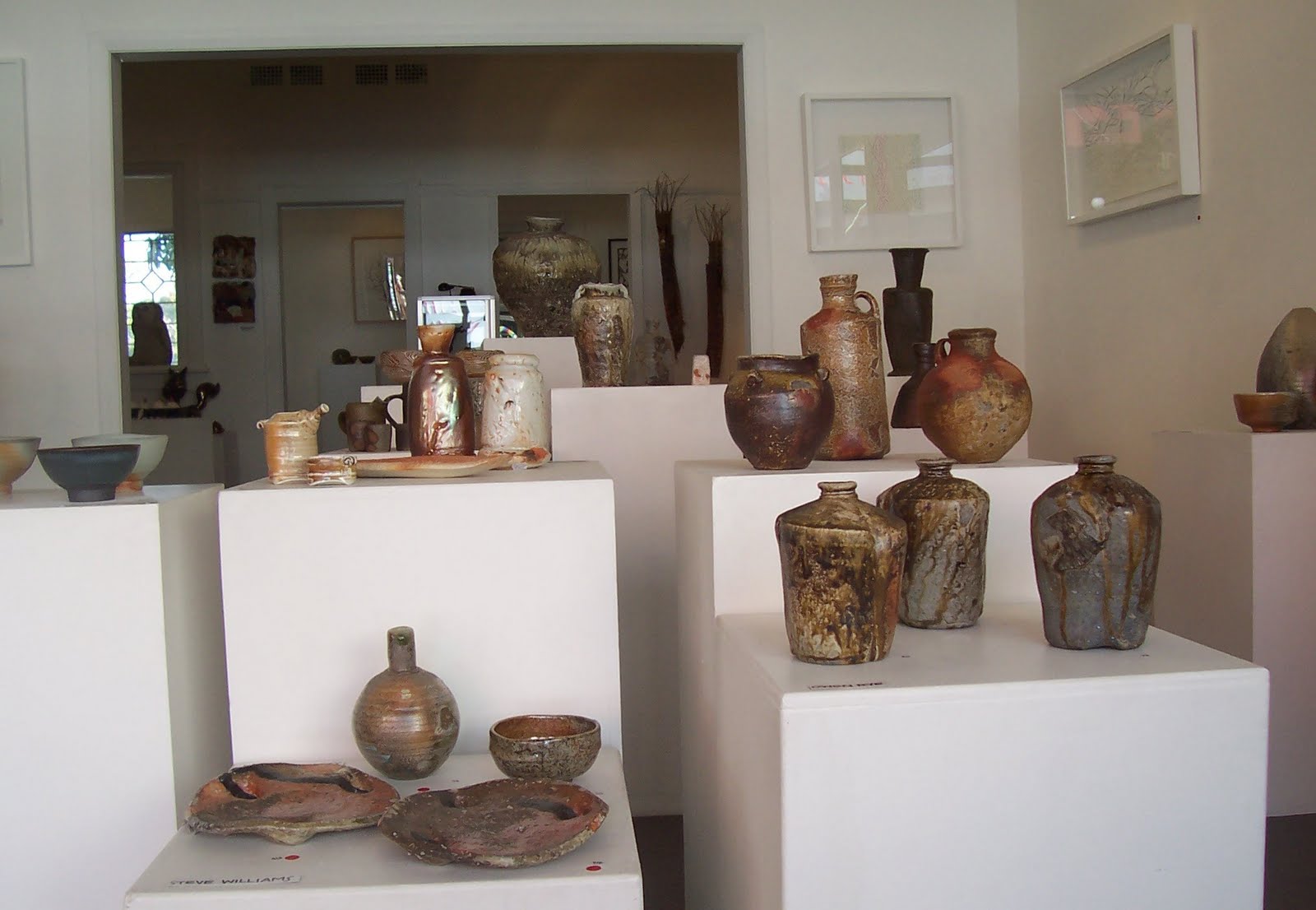
I made it back to Kerrie Lowe's whimsically named Kerrie Lowe Gallery this morning.

The works continue to enthrall. I hope the pictures speak for themselves - in a calmer more coherent way than I do.

Thursday, April 28, 2011

Cafe K at the Kauri Foreshore Hotel

Not long after six in the a.m. I go down each day to get a macchiato from Cafe K. This morning I took a glass to transport it home. A better option than the usual paper cup or to wait and drink it when it reaches the right temperature.

The cafe is a venture that I hope succeeds. Many have tried at that spot and all have failed. When we moved to Glebe there was a very good restaurant at the Kauri. I don't think it had a name. It was run by Joe and the sandwich board on the corner said Joe of No Names. When Joe was asked about No Names he'd consistently say either "I don't have anything to do with those people anymore" or "I don't talk about those people anymore". Joe worked for No Names and then he didn't. Our gain.

We'd take people used to fine dining all over the world to Joe's and they always enjoyed the food. It was Oztalian in style, well cooked and generously proportioned - much like Joe. Our Catalunyan nephew once sat under the table drawing while we feasted on grilled seafood. I think he was wondering why we were eating before 10pm. His mother asked me whether because I was a New Zealander I was able to eat prawns easily with a knife and fork. When I left NZ prawns came in tins or frozen from supermarkets in Asian enclaves in the bigger cities. I hadn't seen a fresh one.

Joe's did so well that eventually even the asleep-at-the wheel landlord of the pub noticed and demanded a huge rent increase. Joe packed up and left. The aatw landlord converted half the dining room into a pokie den and there's never been a successful restaurant at the Kauri since. They come, they fail, they go. The pub changed hands a few years ago and is still finding its feet.

Under the last management the upstairs accomodation area was little better than a doss house. I unwisely booked friends into it for two nights without looking at the room. The cleaner advised Robyne not to use the upstairs bathroom because the "men" were none too finickety in their hygiene and little concerned how their actions affected others. The pub was like a Fawlty Towers themed venue with a lazier and less interested host. I don't know how or why he ended up with the job but he stayed too long. When my friends asked about the possibility of a fan to disturb the cloud of mosquitos they attempted to sleep in the barman said he couldn't help, didn't know the manager and didn't know how to contact him. Turned out he was the aatw landlord's son. You can't buy publicity like that - word of mouth can lead to return business - or not. Suffice to say artists and designers from Christchurch didn't start booking the place out.

The coffee is now good, opening at six is good and the bloke running the cafe isn't expecting to make a fortune in three months, retire and move to the Gold Coast. Good luck.

Wednesday, April 27, 2011

Clayotearoa


We had lunch with friends yesterday - another Easter ritual. Often during the day they complimented us on how great our daughters are - funny, clever, articulate, and good company. It is gratifying as parents to get immediate feedback on your children - particularly when you've seen what is being commented on and know that it's not the biased praise of grandparents or the guarded language of teachers.

My friend Richard has nine children - that's right - count 'em, nine. Over the time I knew him he was voluble about their achievements, their talents, their beauty. Increasingly his pride in them and love for them cropped up in our conversations. He was quick to deflect any suggestions that he was at least partly responsible for this. Similarly he ignored any implication that because of who he was with them they were able to be who they became and are becoming.

He had a number of projects going at any one time and his heightened sense of what was right and wrong, what was fair and unfair often lead him to a point when he abandoned his dreams. Sometimes only temporarily. In his expression of his hurt and fury at the insult or slight he perceived he could cause damage of many types.

The world of ceramic heritage or industrial heritage research in New Zealand is very small. Despite the lack of depth and breadth there are piranhas and parasites aplenty lurking in the shallow pool. Most people seeing a sign saying "Caution Crocodiles In Area" would find another swimming hole. Richard said "What's a caution crocodile? I'll jump in and sort the feckers out!" He'd be correcting the spelling on the front of the bulldozer as it came at him.

As he encountered petty tyrants, ego-driven politicians, grandiose self-appointed experts, rag and bone merchants masquerading as curators - the whole motley conga line of bottom-feeders that lurk anywhere discards can be turned into lumps of cash [see the Australian mining industry to watch these Gollums run wild and free] he never took a step backwards. He won many a Pyrrhic victory. There's a scene in a Monty Python movie of a knight still fighting after he's lost all his limbs - Richard would've regarded that knight as lacking commitment.

In his youth he ended up under lock and key in what is known now by various euphemisms but was known back then as the naughty boys' home. These places hung over 1950s and 1960s New Zealand like a vague threat - a bogey man. They were and to a lesser extent still are presided over by sadists and staffed by bullies. Early on his fellow "clients" realised he was a fighter who had or at least displayed no fear. Then and throughout his life people used to getting away with things because of their size or because of delusions of having real power learnt that he didn't stop fighting until he was physically unable to. He was known in borstal as "Boxer".

Once when television was still a novelty and only broadcast things people wanted to see Richard and one of his daughters were watching a boxing match from the pavement outside an appliance store. I think he said it was a title fight. A large man pushed his daughter aside to get to the front. Richard interceded on her behalf and the large man with his ego bruised as well decided he had an appointment somewhere else. The small crowd's attention had switched from the TV to Richard's explanation of streetside etiquette, he taught in the action method. The crowd applauded and the large man, like many large men do, scurried off looking smaller than the wee girl he'd pushed aside. Today he'd be saying "I'm the victim here. I'll sue". In the simpler morality of those times he was wrong, he was punished, balance was restored. [NB - this is my garbled version of what I recall of a long ago phone conversation - it is no more accurate than a Wikipedia entry].

Richard's simple black and white moral code and the manner in which he expressed it could result in conflicts that ended up in entrenched stand-offs. He was often right but the broad armory he could draw on to support his view meant a lot of collateral damage was possible. The fight often became about the fight and how it had been enacted. He left a trail of upset people all believing "I'm the victim here". It's a handy out for them because the trigger for his grievance gets lost in the distress generated by the people hurt by the way he responded to his awareness of some act of bastardry. His behaviour rather than theirs becomes the focus. He is the problem not the revealer of it.

In his version of the Emperor's new clothes he leaps down from the tree, kicks the Emperor in the shins and calls the crowd gullible fools for believing the spin doctors. In their shame they turn on him. He is satisfied but exhausted and alone. His family and friends pick him up, dust him off and carry him home to live and fight another day. St George having slayed the dragon or Don Quixote having charged the windmill?

He designed a tour for me of the signifcant sites of the West Auckland fired clay industry - he called it Clay-otearoa. Witty but mostly a bad pun - again. This tour was part of a larger dream for long overdue acknowledgement of all aspects of cultural and industrial heritage preservation. The most significant site has all but disappeared under a property "development" that proceded regardless of the legislation intended to preserve New Zealand's cultural heritage. By then Richard was dying, exhausted by his struggles and his unwillingness or inability to pick his battles, to channel his energy, to identify which victories would earn more than they cost. He wept over the fate of Limeburners Bay but had to walk away.

Aucklanders will get a chance to see the results of some of Richard's efforts when Crockery of Distinction opens at the Gus Fisher Gallery next November. His more prosaic research collection may sit alongside the flamboyant displays representing the brief periods when Crown Lynn's output married solid production values with cutting edge creativity. Ironically it is the commercial failures atypical of the company's mainstream wares that most excite the appetites of the hoard accumulators. The icing on the cupcake rather than the meat and three veg.

Tuesday, April 26, 2011

Feet of Clay


A Richard Quinn Story

- - in which I meet a man, am wary of him, grow to like, admire, and then love him. He gets ill, he dies. I miss him then and I miss him now.

In the late 1980s I developed an interest in New Zealand’s Crown Lynn Pottery founded by the Clark family in 1929. The products of this company, once the largest pottery in the Southern Hemisphere are everywhere in New Zealand and yet at the time there was little published about it and nothing in print. I decided to resolve this and began an odyssey that so far has taken almost quarter of a century.

I began by tracking down and taking notes from every published source I could find. A limited number of Crown Lynn products had cast off the shackles of mediocrity that typified their output and were collected by people with an interest in design - The Bohemia ware range, the Keith Murray-influenced thrown and turned range designed by the man then known as Ernest Shufflebottom and the Hand Werk range by Frank Carpay. People I knew through my job on the fringes of the art scene had a few pieces of Crown Lynn. Others had examples of the early multicoloured experimental running glaze works. And of course virtually every house in the country had Crown Lynn products in their cupboards. In that period every op shop had shelves of the pottery and many catering companies used or rented out Crown Lynn. It was ubiquitous and perhaps is more so now. Along with its iconic status and a growing if erratic secondhand market a mythology is building up around it – where there’s brass there’s muck.

I drafted a timeline compiled from my notes and sent it to Linda Tyler a lecturer at Unitec who I’d known through Wellington’s small art gallery openings party scene. Linda complimented my research and suggested drafting an exhibition proposal. She also gave me a list of potential sources for more information. There was an acrimonious dispute going on at the time over pottery stored at the Ambrico kiln site in New Lynn. Lynda wrote that the person saying the collection is his is Richard Quinn an amateur researcher from Avondale. She gave me his address as well as Trish Clark’s and that of another ex-Wellingtonian who was working at the Auckland Institute and War Memorial Museum. I also sent a copy of the timeline to my uncle John who was a friend of Tom Clark’s. I was hoping to arrange to meet Tom and discuss my plan to write about the company. I had the impression my uncle was quite protective of him and besides by that time Tom had little involvement in the day to day running of the company. I also felt that my uncle didn’t want Tom to be bothered by more approaches by under-informed inquisitors and certainly didn’t want to be responsible himself for introducing an additional irritant into Tom’s life as he was by then often ill.

I decided to go with the Richard Quinn option despite or perhaps because of what I saw as Linda’s implication that there was something a bit off about him. I wrote a letter to him enclosing a copy of the timeline and asked for his comments on it and his advice on how to proceed with writing on Crown Lynn for publication. And so began a deluge of comments and advice that still resonates through my life eighteen months after Richard died.

When I worked at proto-Te Papa Tim Walker curator of New Zealand Art had done his thesis on Major-General Robley or Te Ropere. Robley was a fascinating man who had left a number of descendants in New Zealand when he returned to England. Tim describes him as having spent his last days living in cramped accommodation surrounded by his collection of mokomokai, preserved heads and writing obsessively about them and his adventures in New Zealand.

I worry now that I sit Robley-like in my cramped study surrounded by books, papers, pottery and Quinniana obsessing about getting reliable information out to as wide a readership as possible. My wife wonders why I’m cluttering up the spare room with junk and my daughters can’t understand how they’ve lost control of the playroom. We had to get them a laptop as daddy's not so good with sharing.

There has recently been an exhibition of Crown Lynn at Wellington’s City Gallery. The core of the show was pieces from the research collection Richard had amassed over quarter of a century. He’d told me that when he and his family moved from Wellington to Auckland he’d noticed on the drive up that the appearance of buildings changed significantly. There was a point where brick became the dominant building material and he wondered why. Noticing and wondering and asking “Why?” are some of the characteristics that drove the Richard Quinn I grew to respect, admire and love.

When I heard that the Wellington Crown Lynn exhibition is going to show at the end of the year in Auckland’s Gus Fisher Gallery which is administered by Linda Tyler I felt that a circuit was being completed, a homecoming for Richard’s collection and a way for me to unshackle myself from the pile of stuff, baggage I’ve accumulated through my interest in fired clay. Richard had given me architects drawings for Broadcast House the home of the gallery. He'd salvaged them from Crown Lynn - possibly Amalgamated Brick and Pipe supplied some or perhaps all of the bricks for the building. I quickly passed the drawings on to Auckland University as that seemed their most natural home.

I’m in contact with Richard’s family and so far have the encouragement of two of them to write about him. I intend to have something ready to post by September 11th 2011 the second anniversary of his death. I also have a mountain of drafts and Word docs of his book(s) that remind me that intentions, tears and hard work are not enough to get something in print. His history of fired clay in New Zealand eventually became a biography of the odious Samuel Marsden.

Richard regarded much of what was appearing online about Crown Lynn as apalling - poorly researched, unsupported by primary or even secondary sources and in some glaring instances just plain wrong. Such is internet life. I hope to provide an alternative and work with a fine bunch of people doing this here.

In the meantime listen to this - one of Richard's poems set to music by the son of one of an online group he contributed to as the benevolent elder he was becoming as cancer overtook him. The song and its genesis reveal another Richard Quinn story. There are many.

Sunday, April 24, 2011

Easter Sunday


Today we had a family lunch. Us and six guests. In the top photo you may notice that the dial selecting which combination of elements and fan are on in the oven is missing. And a replacement may take months. After a few days of an odd burnt-plastic smell when we used the oven I noticed a fizzing sound accompanying the smoke drifting from the knob. That's not good I thought. The smell reminded me of the Triang-Hornby electric train set we had as children. When minor arcing took place there'd be the same combination of sound and smell.

We had to cater for ten or possibly 11 using only the stove top. Pasta seemed the obvious choice. The house favourite is a tomato-based sauce - a variation on a Napoli style. I first started cooking Italian style when I was living in London twenty-five years ago. Most of the time I flatted with a man who was a skilled cook. We were often broke working jobs seemingly designed to keep us that way. Brian could make a tin of tomatoes, an onion and a 33p packet of spaghetti into a feast - a cheap meal and for the time we were both working in the Buffet Bar of the Hammersmith Palais often a free one. Ever since I've made variations of that basic sauce.

After watching Antonio Carluccio cook a sauce that he kept simmering for long enough to attend mid-morning Mass I added time to the recipe.

After our first daughter was born we went to a new parents course run by the local health service at the Early Childhood Centre in the Dr Foley Park in Glebe. Through this we met a couple who we spent time with before they moved to Darwin a few years ago. Once I helped Alex cook pasta sauce and his recommendation was to use finely diced bottled barbecued red capsicum as a key ingredient. I've been doing variations of this tomato-onion-garlic-capsicum sauce ever since. I build on it depending on who is eating. Today we had the basic tomato variety and another with prawns added for the last few minutes of cooking.

I was a given a pasta machine in Sydney on my way back to New Zealand after I'd served my two years in London. The big OE. My daughters use it now to make spaghetti, tagliatelli and fettuccini. It's not something you whip up on a school night but the texture of the home made pasta is worth the effort. Particularly when you're involved entirely in an advisory capacity.

As the core to a meal pasta and tomato sauce makes a warm reliable heart around which a good meal and a great day can be built. If it's dark outside when your last lunch guests leave it has probably been a good meal. For much of the day we were like a TV family - all tidying, all cooking, welcoming guests and feasting together. Despite or perhaps because of the absence of any religious dimension we enjoyed a warming communal gathering.

My sister-in-law, a potter, has taken my clay god and some pots up to be fired in one of her kilns. Some of the pinch pots were made from clay from Lovetts Bay where my wife's family, my family, has been holidaying for fifty years. I first went there for New Years Eve during that return trip to New Zealand. That homecoming journey contained the seeds of the home I have now.

Saturday, April 23, 2011

Inspector of Public Nuisances

I oftentimes end up scrolling through archives trying to patch together stories about people, places or events. It's easy to get sidetracked by what I see on the way but I think it's important to take time to smell the microfiche. In looking at film of Sydney street directories from 1858 on I found that an Inspector of Public Nuisances lived along the road from our home in the 1870s. (This is remarkable as the house we live in was built about 1914.)

I like the job title, would like the job, and could write my own job description. My wife suspects I'm already doing it unofficially and in the passive-aggressive style that reveals my New Zealand origins. Car journeys provide many opportunities to practice. "Oi, you can't park there! You're blocking the intersection"; "Hey, you're old enough to ride your bike on the road not the footpath"; "They're speed limits - in kph"; "You should be wearing a belt with those, young fellermelad" - not loud enough to be heard by the offender, of course. Possibilities are endless although I was reminded of the golden rule of traffic misdemeanours "You get fined it's a damn good thing - I get fined it's revenue raising".

I was wired to believe that there are rules and maps for everything. You can't always find the maps and the rules can be hidden, incomprehensible and enforced inconsistently. But they're there and must be obeyed. at all times, by everyone - except for the people who don't care, the people who don't know there's a difference between right and wrong, the people with power enough to make their own rules and apply them to others.

I remember when one of those barely coherent US of A presidents sought to explain American policy in, can't remember - somewhere US multinationals had major interests - by saying "they're not terrorists they're freedom fighters". Or was it the other way round?

And now we have the phrase “not intended to be a factual statement.” It was used in a press statement after US Senator Jon Kyl quoted statistics that were so wrong as to be absurd in a speech trying to cut government funding to Planned Parenthood. He was shown to have miss-spoken and rather than admit to it and apologise came up with a convoluted way of avoiding responsibility for his actions.

There's talk that politics, elections etc are the sideshow the rich and powerful use to distract us while they get on with the real business of making themselves richer and more powerful. The deus ex machina appears when one of the rich and powerful takes a holiday and dabbles in politics. New Zealand is a classic example at present - slumming it on a Prime Minister's stipend the current leader and his round table have bought backroom deals out into the spotlight, the secret handshakes and "you scratch my back and I'll suck yours" arrangements that have been going on there since the start of the nineteenth century are now policies in the best interests of "the people". Like something George Orwell would have had getting past his editor US conglomerates now write Kiwi industrial legislation, giving $36,000,000 to a few old mates for a racing yacht is somehow part of a cost-cutting regime, draconian internet laws are marketed as helping earthquake-proof Christchurch and the IRB's latest cash cow will be subsidised by tax and ratepayers.

I'm wondering if over the last ten or so years a number of methamphetamine factories have exploded in Noisyland polluting water catchments? How else to explain how bizarre behaviour has become the norm? The emperor's new clothes are made of pounamu, a treasured green stone, used for objects of prestige and value and souvenirs.

It's as if the Prime Mover has looked over the Tasman, seen NSW politics as it was practised in the Askin Error, or under the Carr/Iemma/Anyone-else-brave-or-naive-enough-to-take-on-the-rightwing-unions-and-the-shonks Error and said gimme summathat. Nicky Hager who wrote The Hollow Men is a different kind of kiwi, a very articulate intelligent and concerned individual who has consistently been saying "Wait up, this isn't right". His 2006 book outlines dodgy deals, backroom tactics, marketing as policy, the insidious actions of the merchants of spin Crosby/Textor, everything that makes politics a soul-less cynical activity. Paradoxically it seems to have been adopted as a training manual. Rather than a dreadful warning.

Of the two men most shown to be hollow in the book one was sent to the wilderness and the other elected PM. That's comedy gold right there.